Modular Wardrobe Cost in Pune: Price Guide and Quote Checklist for 2026

Modular wardrobe cost in Pune usually falls between ₹35,000 and ₹1.8 lakh for one bedroom wardrobe, depending on width, height, board, shutters, hardware and internal accessories. A practical 6–8 ft full-height wardrobe for a Pune apartment often lands around ₹60,000–₹1.2 lakh before unusual civil work or premium finishes. Treat these as planning ranges, not guaranteed rates: the only reliable comparison is between itemised quotes with the same scope.
Updated October 2026
What decides modular wardrobe cost in Pune?

The biggest cost driver is the amount of storage you are building. A 4 ft wardrobe with two shutters is not comparable to an 8 ft floor-to-ceiling unit with lofts, drawers and a dresser. Measure wall width, ceiling height, skirting, switches, windows and door swing before requesting a quote. In apartments around Wakad, Hinjawadi, Baner, Kharadi and Hadapsar, full-height storage is popular because bedrooms are compact, but the loft portion can make the quote look lower or higher depending on whether it is included.
The second driver is the carcass and shutter material. Budget laminates may keep the visible price low, while acrylic, glass, veneer, PU paint or textured finishes increase both material and installation cost. The third is hardware: soft-close hinges, tandem drawers, pull-down hangers and branded channels can add a meaningful amount to a small project.
Finally, check whether the quote includes measurement, delivery, installation, GST, dismantling, wall preparation, skirting changes and debris removal. A ₹55,000 quote with exclusions may cost more than a ₹70,000 quote that is genuinely complete.
What are typical wardrobe price ranges in Pune?
Use the following table only as a first budgeting tool. The final number depends on dimensions and specifications.
| Wardrobe type | Broad planning range | Usually suitable for |
|---|---|---|
| Basic hinged, 4–5 ft | ₹35,000–₹65,000 | Guest room or limited storage |
| Standard hinged, 6–8 ft | ₹60,000–₹1.2 lakh | Primary bedroom in an apartment |
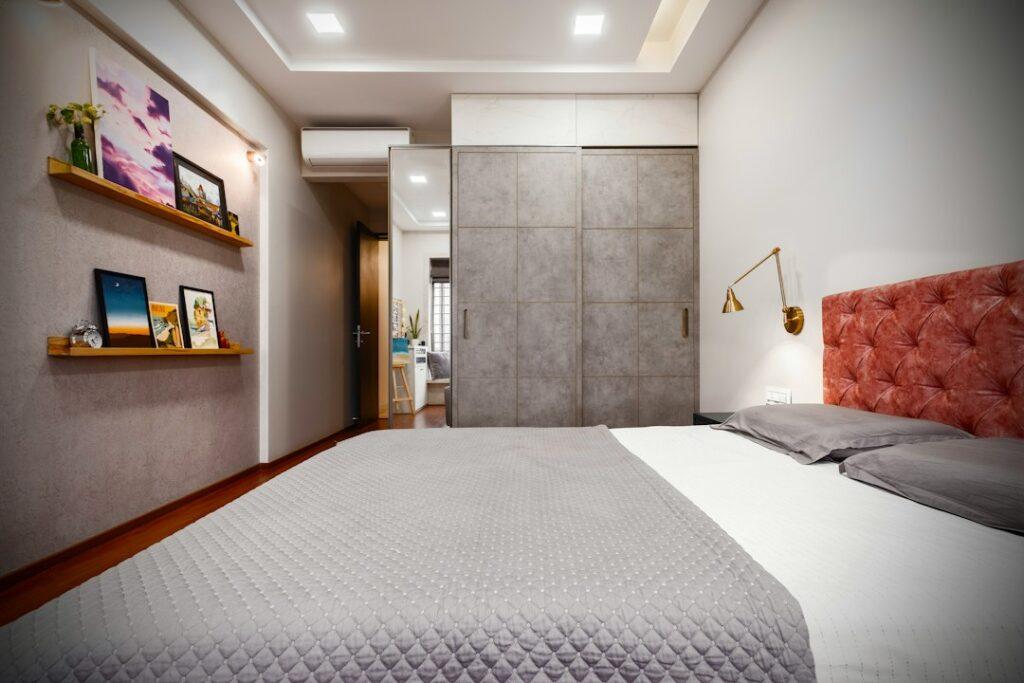
| Sliding, 6–8 ft | ₹80,000–₹1.5 lakh | Rooms needing more front clearance |
| Premium finish or custom accessories | ₹1.2–₹1.8 lakh+ | Detailed storage and upgraded finishes |
Per-running-foot pricing can be useful, but it is easy to misunderstand. Ask what the running-foot rate includes: carcass, shutters, loft, back panel, handles, hinges, drawers, installation and taxes. A low rate that covers only the external box is not a complete wardrobe price.
Which material should you choose for a Pune wardrobe?
Ask the designer to specify the board separately for the carcass, shutters, back panel and wet or vulnerable areas. Plywood, MDF, HDHMR and particle board each have different cost, weight, finish and moisture characteristics. There is no single material that is automatically best for every wardrobe. The important questions are where it will be used, how the edges are sealed, what load the shelves carry and what warranty is offered.
For a bedroom away from water, a well-specified engineered-board solution may be perfectly practical. If a wall has a history of dampness, solve the seepage first and do not rely on a premium laminate to hide it. In Pune’s monsoon, sealed edges and a small ventilation strategy can matter more than choosing a fashionable colour. Avoid placing the bottom edge directly against a damp or uneven floor; ask how the plinth will be protected and levelled.
Are hinged or sliding wardrobes cheaper?

Hinged wardrobes are often more economical and give better access to the full interior because each shutter opens independently. They need clear space in front, so check the bed-to-wardrobe distance and door swing. Sliding wardrobes save front clearance and can look streamlined, but tracks, larger shutters and alignment requirements usually increase cost.
Choose sliding shutters when the room layout genuinely needs them, not only because they look modern. In a narrow bedroom, measure the usable passage with the bed, wardrobe and open shutter shown on the plan. A designer should be able to demonstrate this in a drawing before production.
Which internal accessories are worth paying for?

Start with the storage you actually use. Full-width shelves, two hanging zones, a drawer stack and a separate luggage shelf often deliver more value than a long accessory list. Add pull-out baskets, trouser racks or jewellery trays only when the household will use them. Every moving part increases cost and creates another item that may need adjustment later.
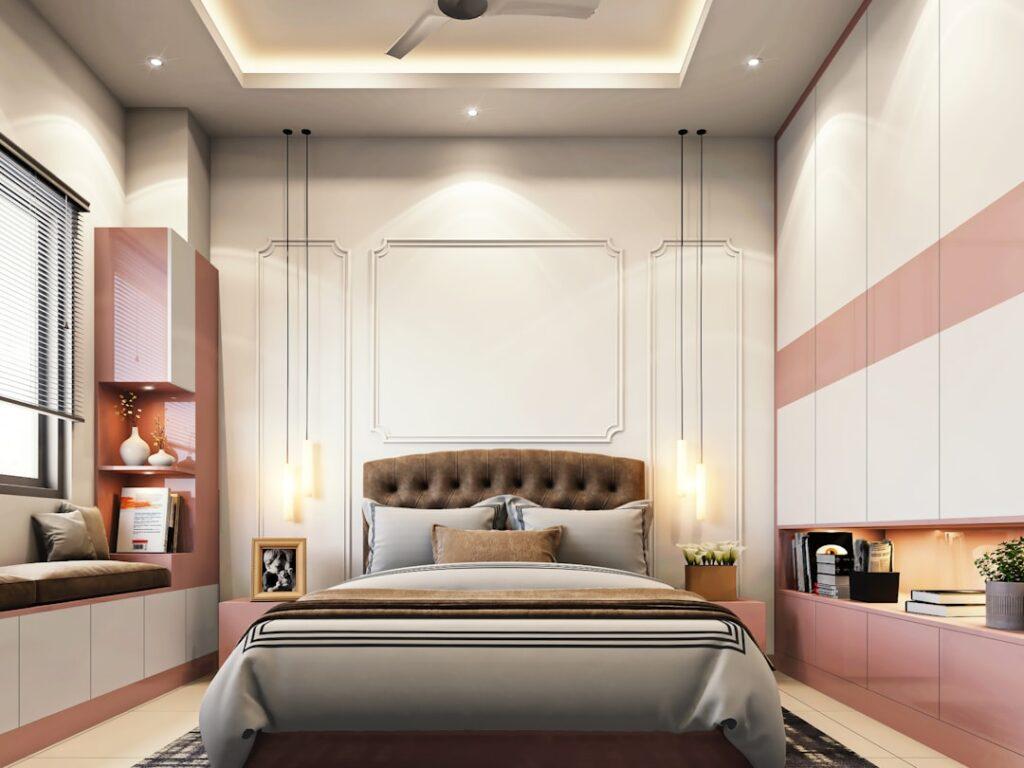
A sensible primary-bedroom layout could include long-hanging space for dresses, double hanging for shirts and trousers, drawers for daily items, shelves for folded clothes and a top loft for seasonal luggage. For a child’s room, keep frequently used shelves reachable and avoid making every section dependent on a ladder.
How much do finish and hardware add?

Laminate is generally the most predictable finish for a value-conscious wardrobe. Acrylic, glass, fluted panels, veneer and painted shutters can add cost through both material and labour. Dark glossy finishes may also show fingerprints and dust more readily, while textured or matte surfaces can be easier for daily use.
Hardware should be quoted by brand or series, not described only as “premium.” Ask for hinge load rating, drawer channel type, warranty and replacement process. Soft-close hardware is useful in bedrooms, but it should not be used to distract from a weak carcass or poor installation.
What extra costs should you expect?

Budget separately for dismantling an old cupboard, shifting switches, repairing a wall, changing skirting, levelling the floor, adding lights, moving a socket, repainting and making good after installation. If the wardrobe touches a ceiling beam or a window reveal, custom fillers may be needed. A site visit should identify these items before the final quote.
Keep a contingency of about 10–15% for genuine site discoveries or approved changes. Do not use the contingency to accept vague “miscellaneous” charges. Every addition should be written down with quantity, rate and approval.
What should a Pune wardrobe quotation include?
Request a drawing and a line-item schedule. It should show overall width, height and depth; shutter split; internal shelves and drawers; board specifications; finish code; hardware; back panel; loft; handles; plinth; delivery; installation; taxes; warranty; payment milestones and expected completion date.
Also ask what happens if the wall is out of square, a panel arrives damaged or a drawer needs adjustment. A good quotation makes exclusions visible. Compare at least three professionals using the same dimensions and brief. If one designer has assumed a loft and another has not, their totals cannot be compared fairly.
How long does modular wardrobe installation take?

A standard wardrobe may take roughly 2–6 weeks from design approval to installation, depending on material availability, factory workload and site readiness. Installation itself may take one or several days. Custom paint, veneer, civil repairs and multiple bedrooms can extend the schedule.
Before delivery, clear the room and protect floors. Keep required access and clearances intact rather than blocking ventilation or electrical service points; recognised building guidance is available in the BIS National Building Code proposal. After installation, check shutter alignment, drawer movement, edge finishing, wall gaps, handles, lights, plinth stability and access to nearby switches. Hold the final payment until the agreed snag list is closed.
What mistakes increase wardrobe cost?

The first mistake is choosing by running-foot price alone. The second is designing storage without checking the bed, window, door and switch positions. The third is adding too many accessories before calculating what the household needs. Another common error is ignoring dampness or an uneven wall until after fabrication.
Do not approve production from a 3D render without a dimensioned drawing. Do not accept “waterproof” as a complete material specification. Ask what is protected, how edges are sealed and what the warranty excludes. Finally, avoid paying the entire amount upfront; use stage payments linked to design approval, production, delivery and snag completion.
Frequently asked questions
What is the average modular wardrobe cost in Pune?
A typical 6–8 ft wardrobe often costs about ₹60,000–₹1.2 lakh, while smaller basic units can start around ₹35,000 and premium custom work can exceed ₹1.8 lakh.
Is a sliding wardrobe more expensive than a hinged wardrobe?
Often yes, because sliding shutters need larger panels and track hardware. The right choice depends on room clearance, not appearance alone.
Should I choose plywood or MDF?
Ask for a location-specific specification. Both can be appropriate in different applications; edge sealing, installation quality, moisture exposure and warranty matter as much as the label.
How can I reduce wardrobe cost without making it flimsy?
Use a straightforward laminate finish, limit accessories, standardise shutter sizes and prioritise internal storage over decorative panels. Keep the carcass and hardware specification clear.
How do I compare interior designers for a wardrobe?
Give each professional the same measurements and brief, then compare drawings, materials, hardware, inclusions, exclusions, timeline, warranty and payment schedule.
If you are ready to turn your storage requirements into comparable proposals, use MatchedNeeds to compare verified interior designers in Pune. Share your room dimensions, review 3–5 quotes and choose the clearest scope rather than automatically choosing the lowest headline price.